
INDIECADE · 2024
Live Action
WINNER / LOS ANGELES
01 / 17 · IMMERSIVE EXPERIENCE
ChromaCorp
An Immersive Live-Action Themed Game
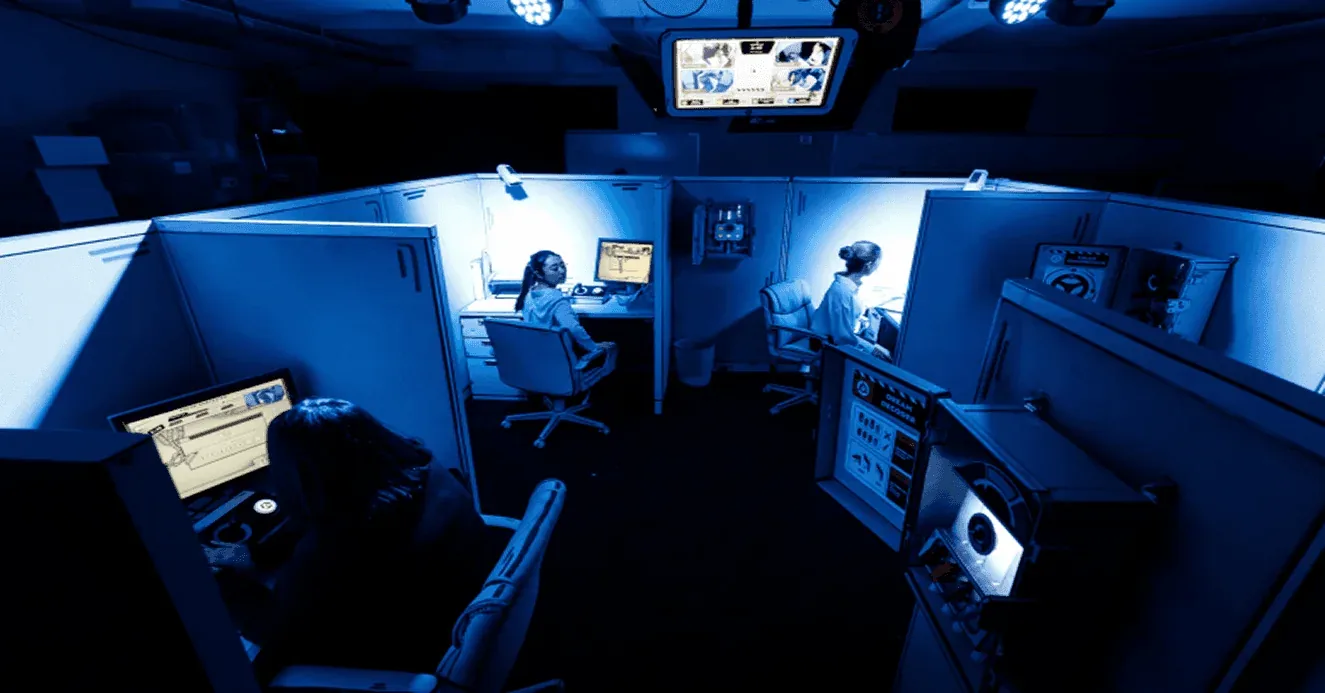
ChromaCorp is an immersive narrative-driven installation game blending physical computing, DMX lighting and custom controllers. Players manipulate alternative controllers to expose the truth behind ChromaCorp.
PHYSICAL COMPUTINGPROPS DESIGNDMX LIGHTING
 C
C
MY ROLECreative Technologist
SKILLSPhysical Computing · Props Design · DMX Lighting
PROJECT TYPEEntertainment · Live-Action Game · In-Person
TIMELINEJan—Sep 2024
Jan—Mar 2025
Jan—Mar 2025
Awarded in play.
Recognized by two leading festivals for live-action gameplay and audience experience.
ALT.CTRL.GDC · 2025
Audience
WINNER / SAN FRANCISCO
Audience
Award
WINNER / SAN FRANCISCO
PROJECT FILMSee ChromaCorp
See ChromaCorp
in action.
A closer look at the live-action game, its physical controllers and the complete playable installation.
How can we design an immersive, cooperative narrative experience where physical controllers amplify emotional engagement?
01 / GAME OVERVIEWThe dream job
The dream job
is not what it seems.
Game Story
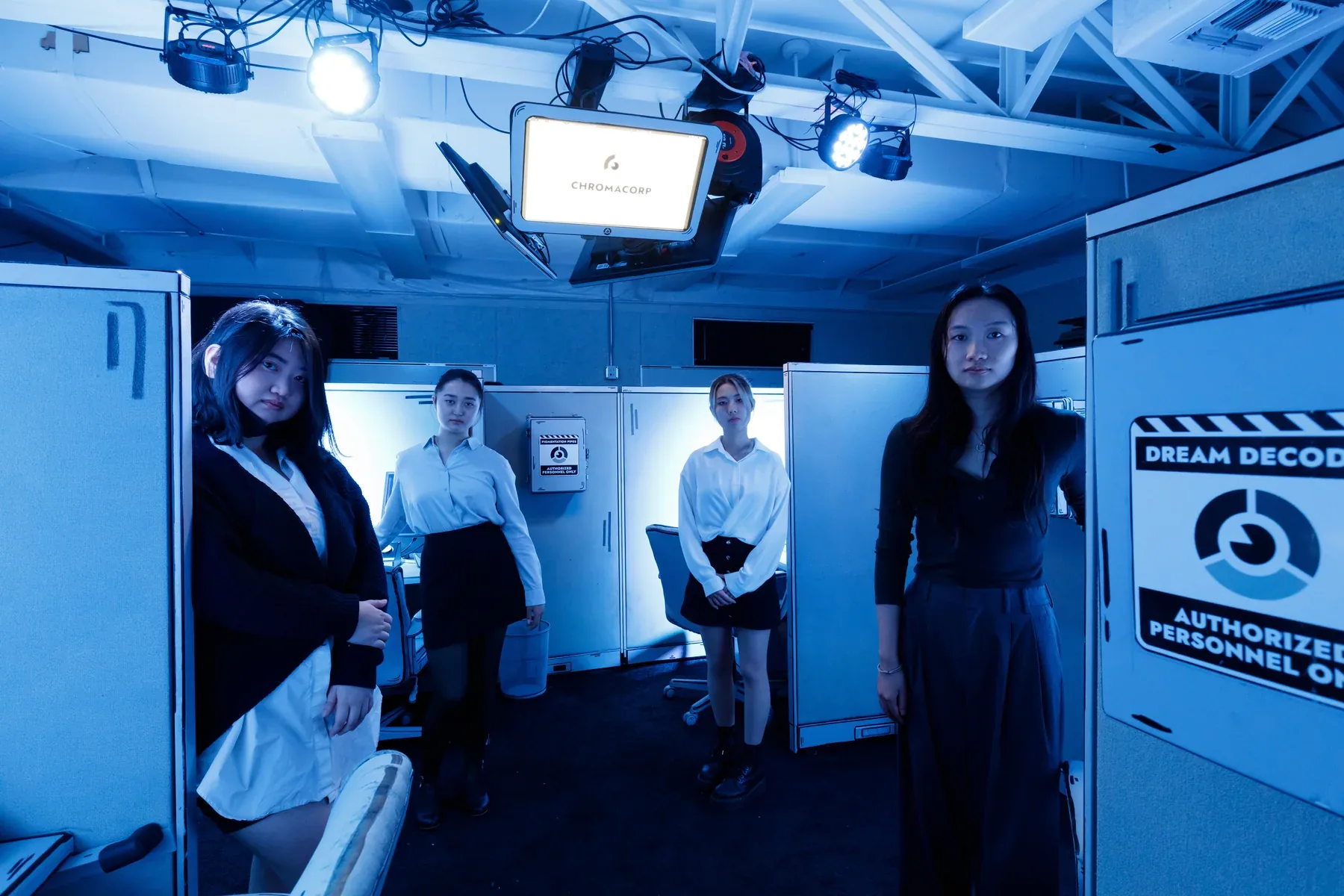
Players are hired at a dream job at ChromaCorp, a company that harvests colors to power the world. As they perform mundane desk work—extracting colors on their terminals to meet daily quotas—they begin to uncover the unsettling truth behind where those colors come from.
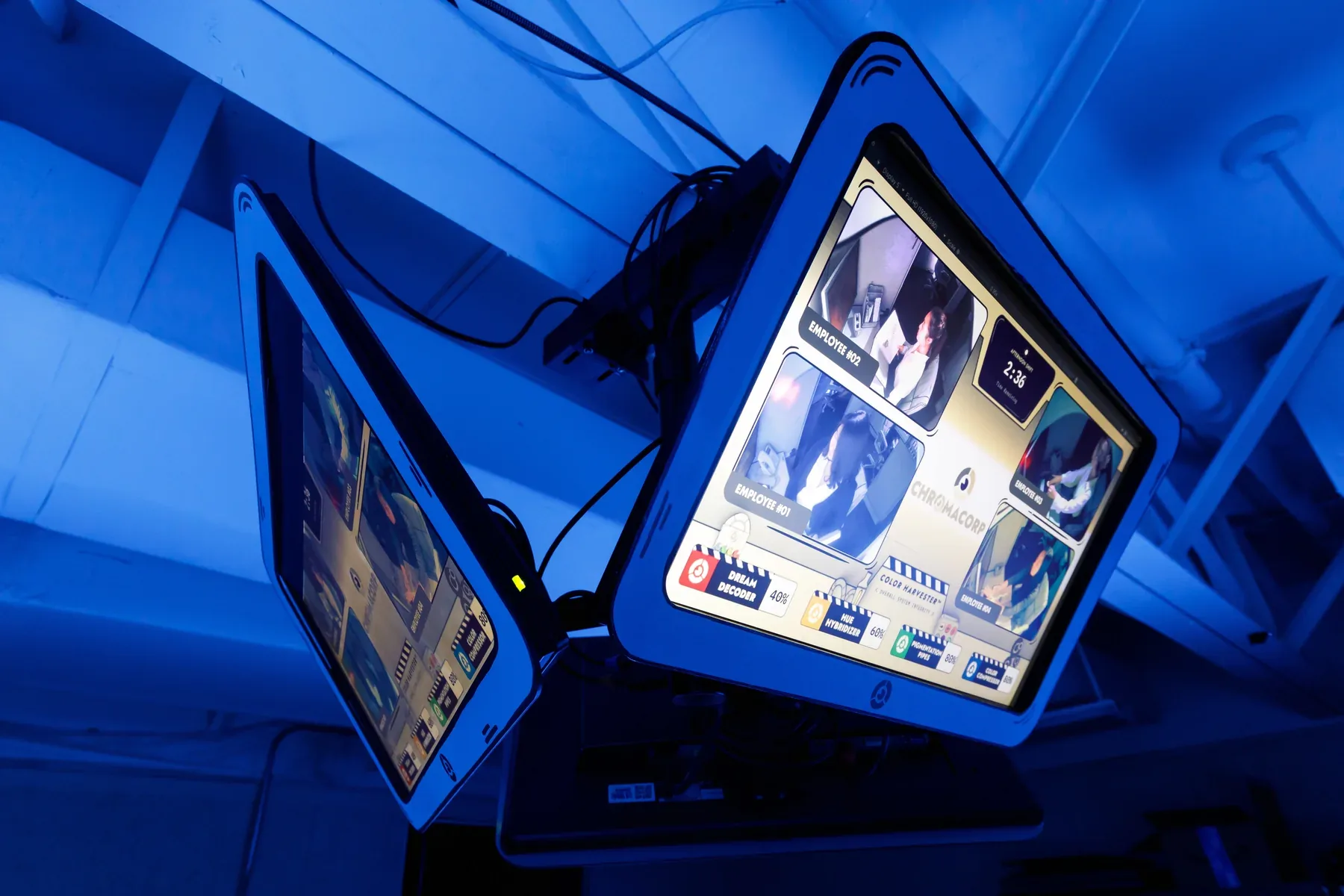
Players must work together to subvert the system, sneak away from their cubicles and avoid the ever-watchful corporate surveillance.
02 / MY ROLEConnecting story,
Connecting story,
technology and space.
As Creative Technologist, I worked across narrative, set design, prop making, controller fabrication and environmental interaction.
- 01Created story connections with the concept artists so gameplay and narrative developed together.
- 02Co-designed connectivity between the workstations, four secret stations and the Unity game.
- 03Decorated the set and collected, created and adapted props for the fictional corporate office.
- 04Designed, fabricated and installed alternative controllers, lighting triggers and physical effects.
03 / GAME SET DESIGNA familiar office
A familiar office
with something off.
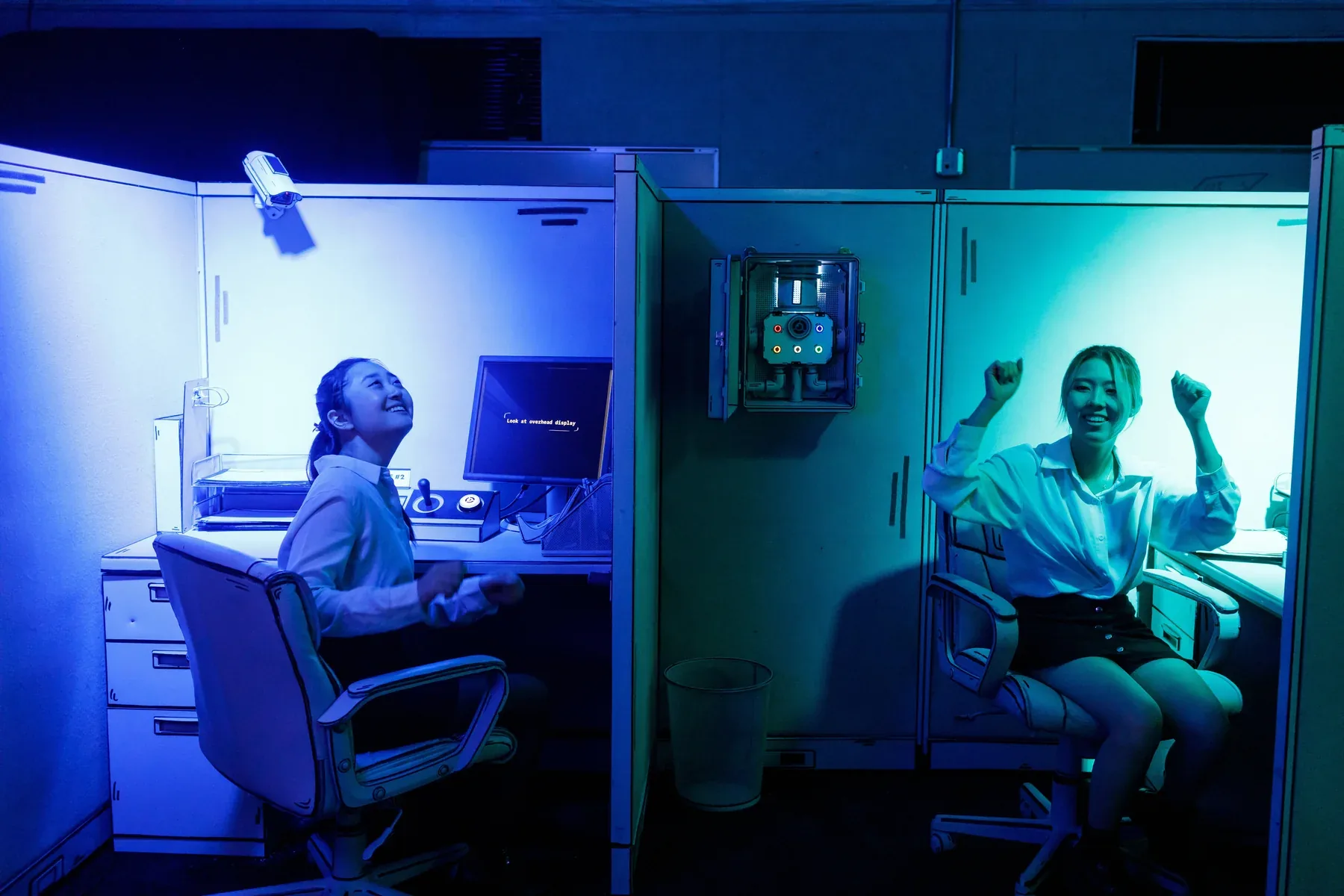
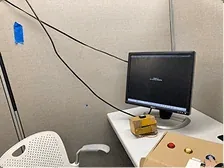
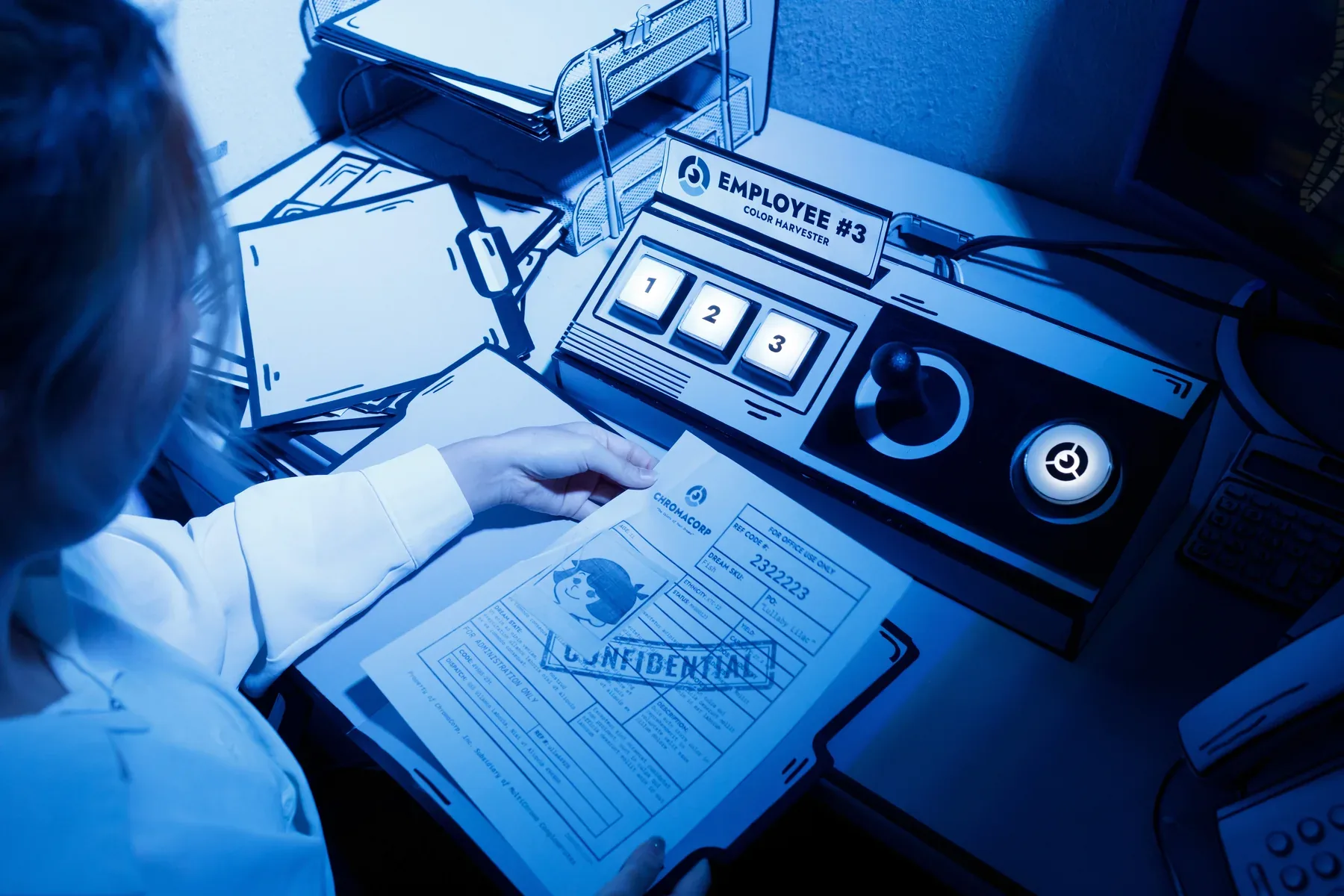
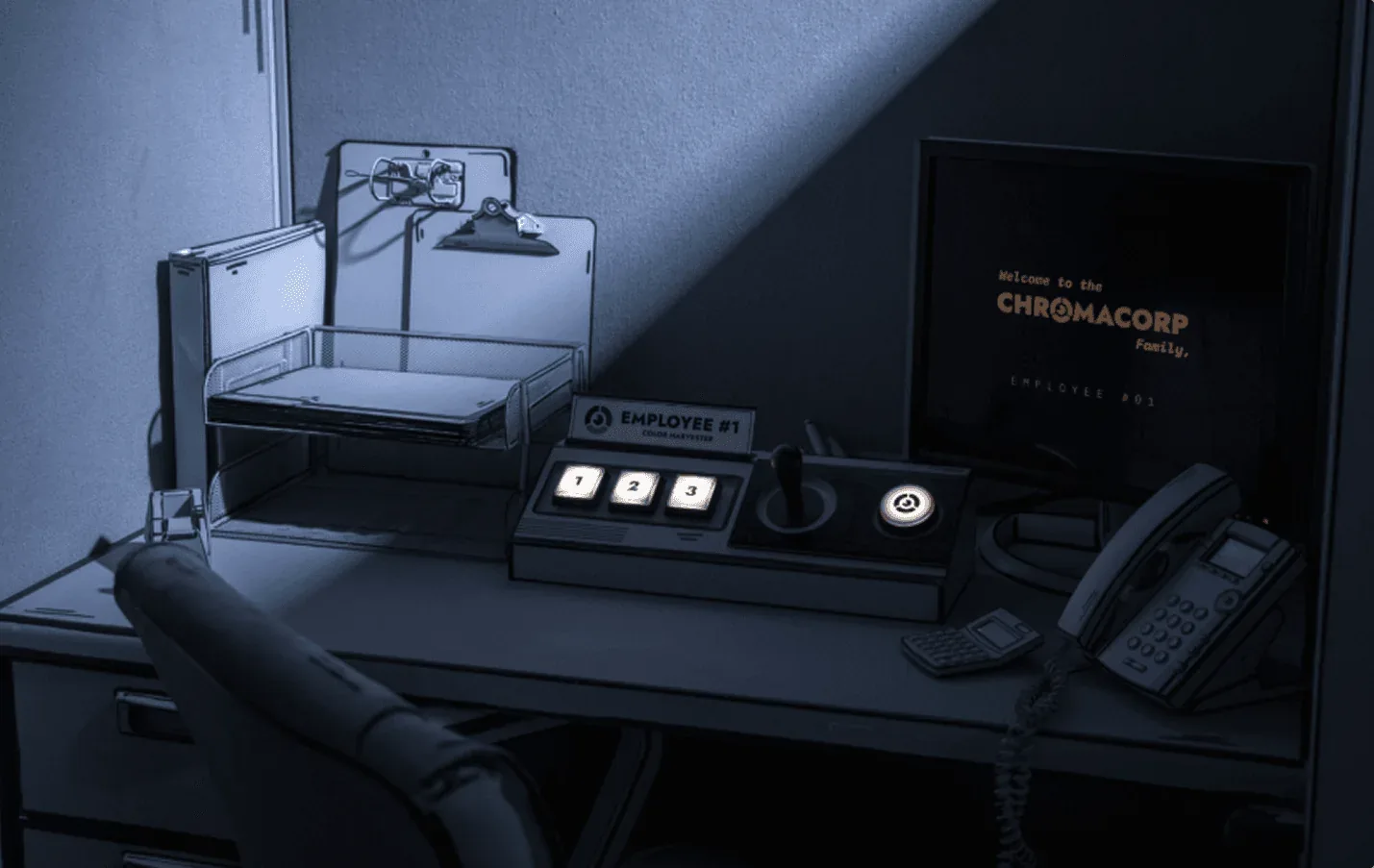
The ChromaCorp set draws heavily from the 1970s corporate office aesthetic, combined with a surreal, hand-painted visual language that blurs the line between real and artificial.
SET DECORATIONPROP COLLECTION + CREATIONCONTROLLER INSTALLATION
04 / ALTERNATIVE CONTROLLER DESIGNDaily Works
Daily Works
Controller
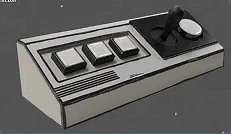
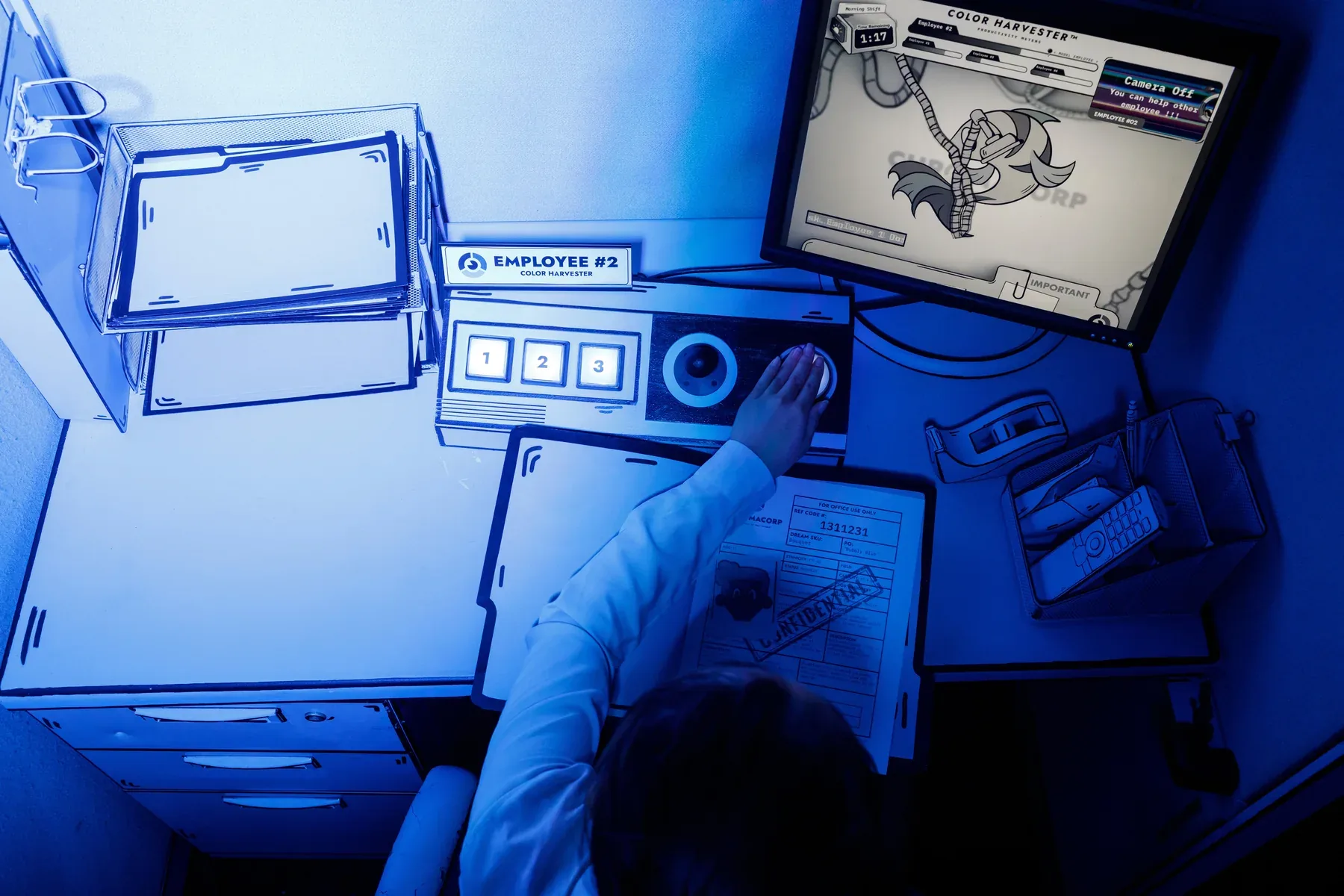
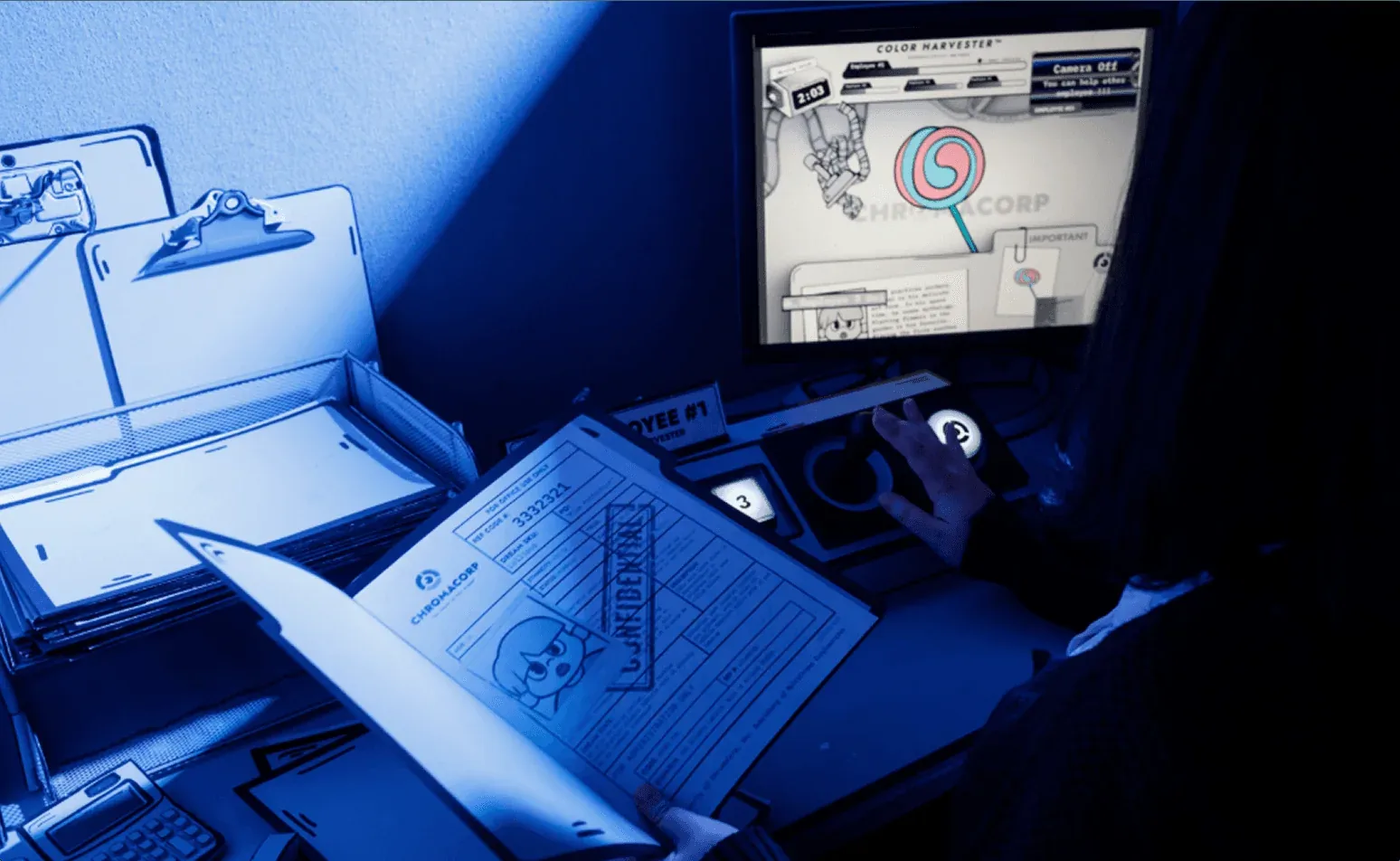
At their desks, players complete an extraction game: type an ID number from a profile folder, move a joystick like a mouse and press the extraction button to remove color.
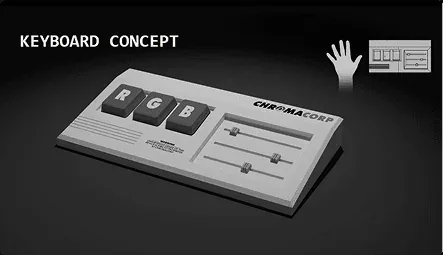
WHY IT CHANGED
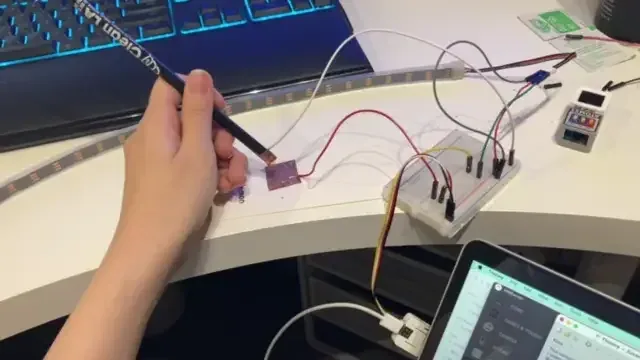
The first version used a keyboard and a slider-based color-matching game. Testing showed that it was too difficult and the technical setup was unreliable, so I simplified the interaction: the joystick became the mouse and the extraction button became the click.
05 / SECRET TASK CONTROLLERSFactory machines
Factory machines
made playable.
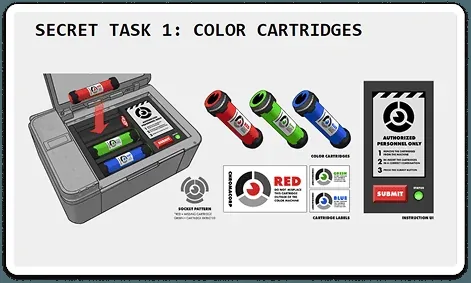
Each secret station uses a different industrial gesture, giving cooperative tasks a clear physical identity and making every discovery feel consequential.
STATION / 01
Hue Hybridizer
Inspired by factory fluid pipelines, this station focuses on the tactile tension of plugging and unplugging. Magnetic connectors let tubes snap securely onto bottles, creating a more intuitive and satisfying interaction.
STATION / 02
Color Compressor
Inspired by industrial pressure valves, the controller uses three dials with different sizes and rotation speeds. Their varied resistance and movement add tactile rhythm and gameplay dynamics.
STATION / 03
Pigmentation Pipes
The first concept used a network of rotating pipes to simulate factory machinery. Through iteration, I simplified the rotation into a more accessible interaction that also made difficulty easier to tune.
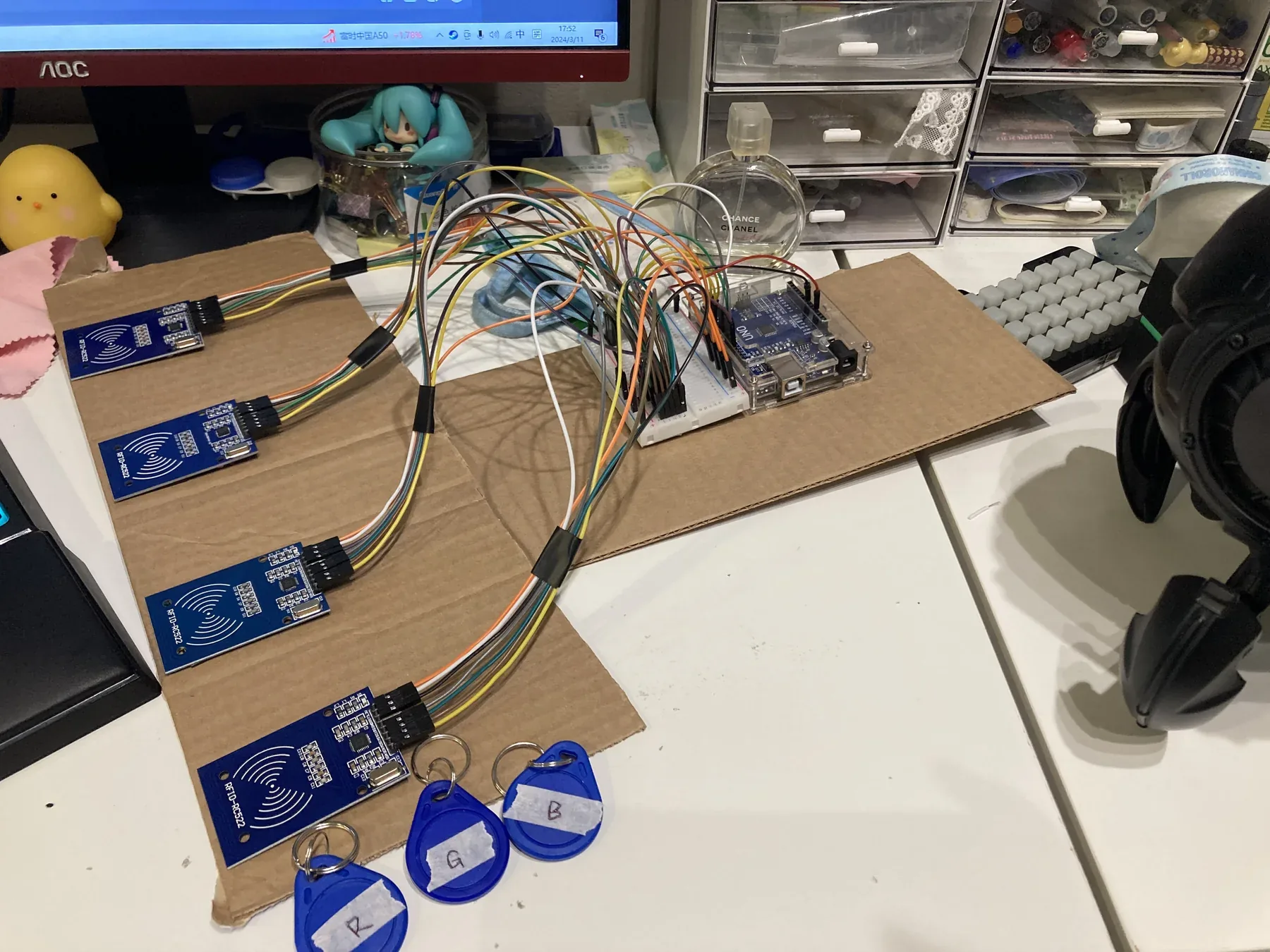
Not every machine
made the final floor.
Many early directions—including a copy machine controller and a color wheel—were removed as the experience became clearer. These tests were still valuable: they revealed which gestures felt natural, what the technology could support and where the game was becoming unnecessarily difficult.
Concept exploration and rapid prototyping helped us simplify without losing the strange industrial character of ChromaCorp.
07 / IMMERSIVE DESIGNThe room responds
The room responds
to the story.
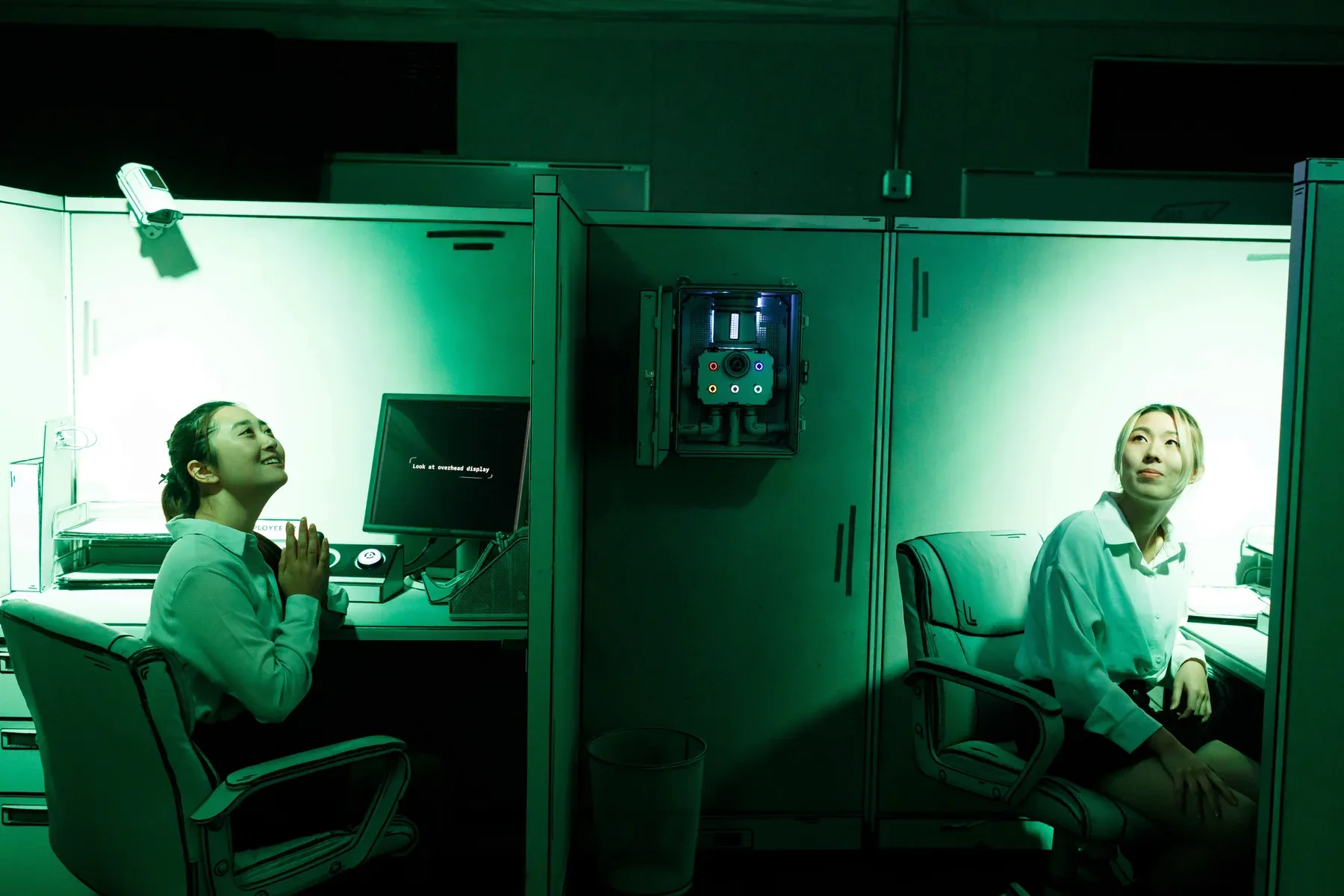
01 / DMX LIGHTING
Emotional atmosphere
The physical environment is synchronized with gameplay. Ambient light moves from white to red or dynamic color patterns as players progress, reinforcing tension and narrative pacing.
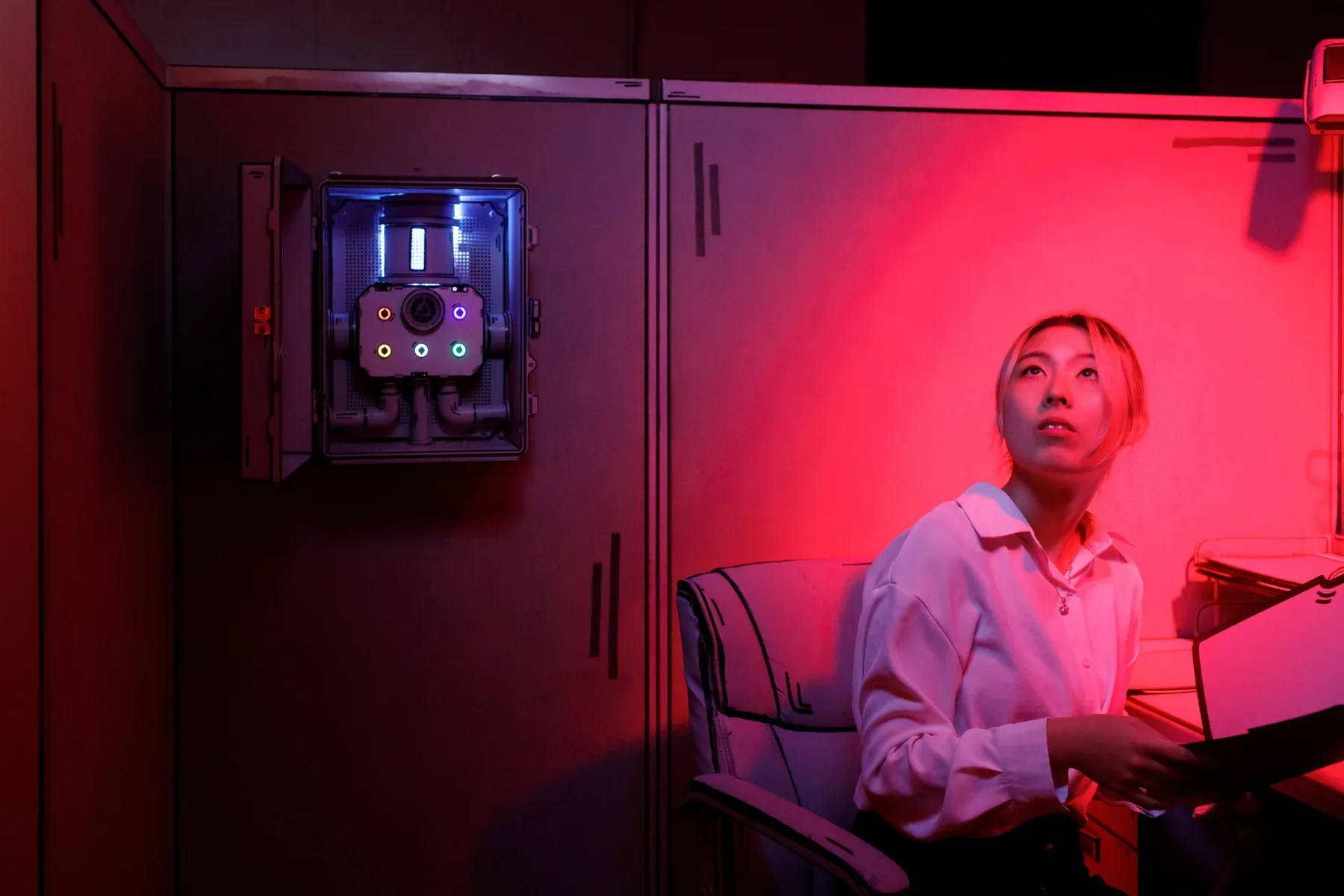
02 / DOOR OPENING
An “accidental” reveal
During play, a door suddenly opens to reveal secret missions. A special lock makes the door pop open on cue, turning a scripted event into a surprising physical accident.
08 / FINAL OUTCOMEWelcome to
Welcome to
your first day.
The finished experience combines desk work, covert missions, responsive light and corporate surveillance into one cooperative arc.
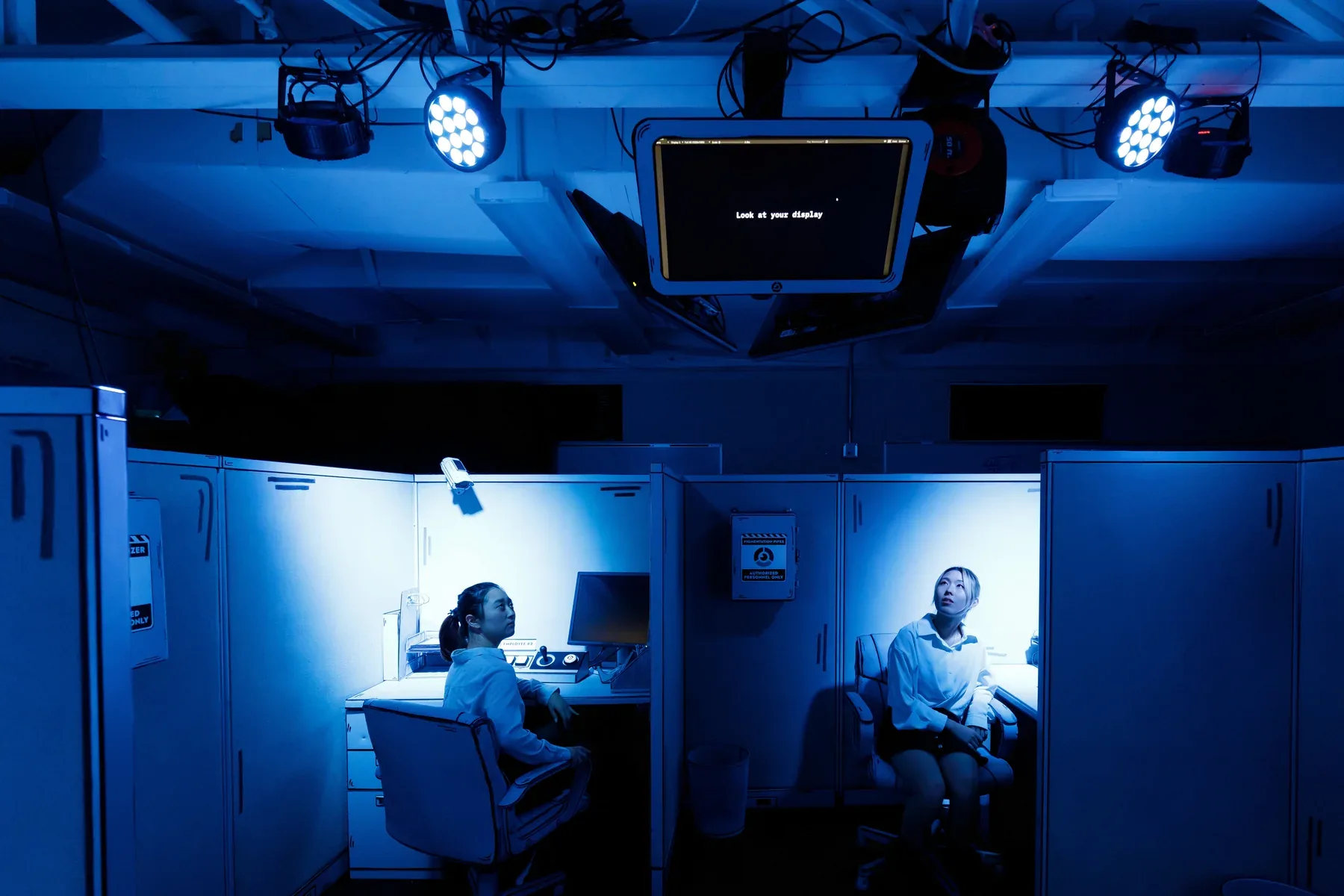
10 / TAKEAWAY
Reflection
Designing for immersion meant balancing physical affordances with narrative intent. Testing with players showed how lighting and touch could shape emotion and engagement, deepening my passion for connecting technology, storytelling and feeling.
TEAM / CREDITS
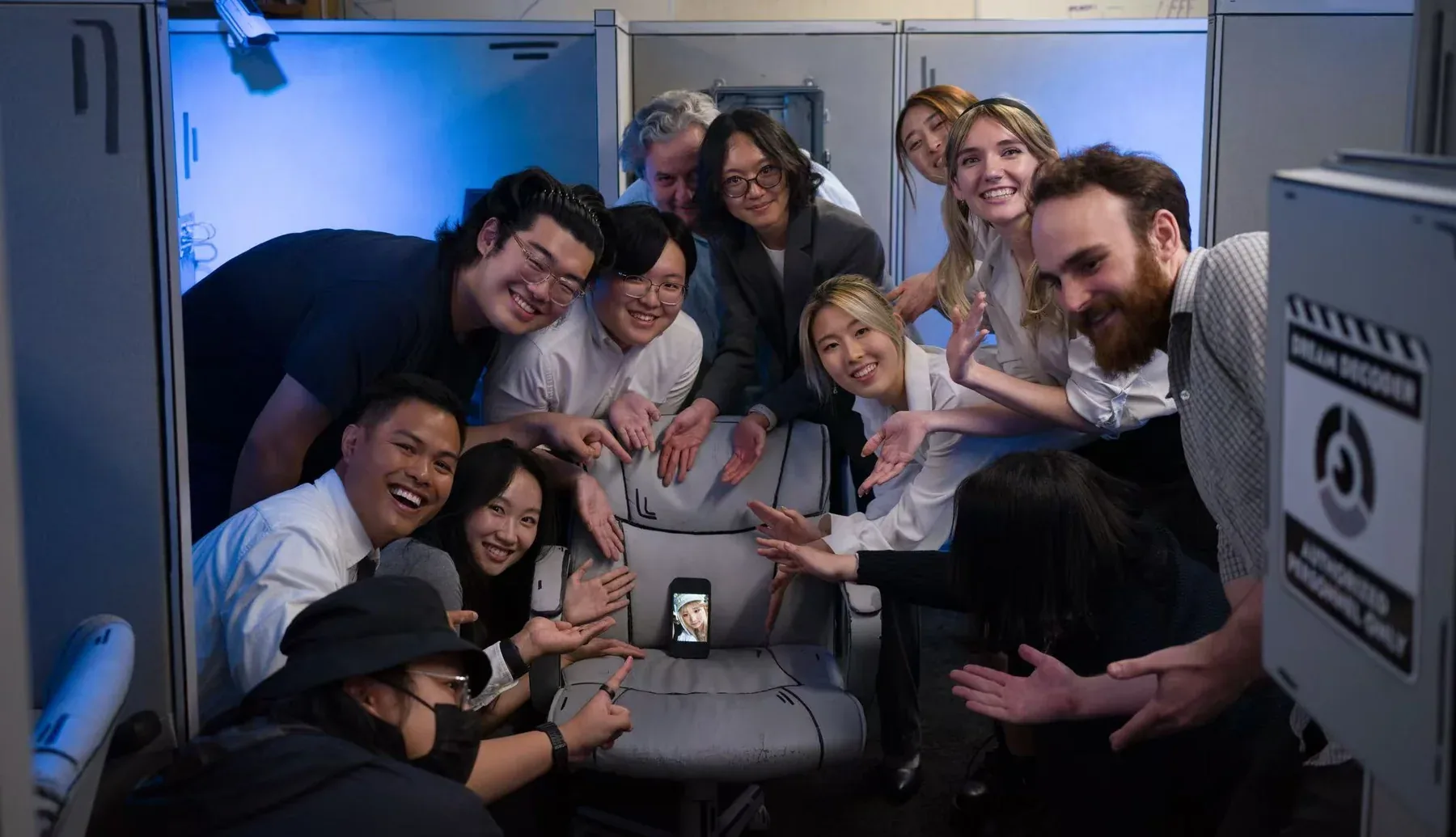
Made together.
Ethan Chamberlain · Jason Jiang · Irene Jung · Miree Kim · Nicole Kim · Fox Miao · Daeun Min · Sydney Price · Christina Wang · Monica Zhao · Galina Zhu
FACULTY / Justin Andarza · Forrest Lucas · Simon Smith